



skin pass mill pdf
/A skin pass mill is a specialized type of cold rolling equipment used to enhance the surface quality and mechanical properties of metal strips, particularly steel and aluminum. Unlike conventional rolling mills that focus on significant thickness reduction, skin pass rolling applies minimal deformation—typically 0.5% to 3%—to achieve a smoother, more uniform surface. This process is essential in industries where surface finish, flatness, and paint adhesion are critical, such as automotive, appliance manufacturing, and construction. The term skin pass mill originates from the light "skin" deformation applied to the metal surface. Depending on the application, mills can be configured in different designs, including 4 Hi skin pass mills for high-precision work and hot skin pass mills for specific thermal treatments. Understanding how these mills operate and their impact on material properties is key to optimizing metal finishing processes. The Working Principle of a Skin Pass Mill At its core, a skin pass mill functions by passing a metal strip through a set of work rolls under controlled pressure. The primary objective is not to reduce thickness significantly but to modify the surface texture and relieve internal stresses. The process involves three key mechanisms: Surface Smoothing – The rolling action eliminates minor imperfections, such as roughness or oxide scales, creating a more uniform finish. Work Hardening Control – By inducing slight plastic deformation, the mill adjusts the material’s yield strength, preventing the formation of Lüders bands (uneven deformation lines) during forming operations. Residual Stress Relief – The light rolling pass redistributes internal stresses, improving flatness and reducing the risk of shape distortions in subsequent processing. In a 4 Hi skin pass mill , two smaller work rolls are supported by larger backup rolls, allowing for precise pressure control and better surface consistency. Meanwhile, a hot skin pass mill operates at elevated temperatures, often used for stainless steel or specialized alloys where thermal treatment enhances ductility. Key Components of a Skin Pass Mill and Their Roles A modern skin pass mill consists of several critical components that ensure optimal performance: 1. Work Rolls and Backup Rolls The work rolls are the primary contact points with the metal strip, applying controlled pressure to refine the surface. In a 4 Hi skin pass mill , the backup rolls provide structural support, preventing excessive deflection under load. These rolls are often made from high-chromium steel or carbide to resist wear and maintain precision over extended use. 2. Tension Control Systems Precise strip tension is crucial in skin pass rolling to avoid stretching or wrinkling. Hydraulic or servo-driven tensioners maintain consistent pull throughout the process, ensuring uniform deformation. 3. Cooling and Lubrication Systems Even though skin pass rolling generates less heat than heavy reduction rolling, controlled cooling is still necessary to prevent thermal expansion of rolls. Emulsion-based lubricants reduce friction, extending roll life and enhancing surface quality. 4. Automation and Quality Monitoring Advanced skin pass mills integrate real-time monitoring systems, such as laser profilometers and optical scanners, to detect surface defects and adjust rolling parameters dynamically. Automated feedback loops ensure consistent output, even with varying material properties. How Skin Pass Rolling Enhances Surface Finish The primary advantage of a skin pass mill lies in its ability to transform a raw metal strip into a high-quality product ready for further processing. The key improvements include: Improved Paint Adhesion – By creating a slightly roughened (but controlled) surface, skin pass rolling enhances the bonding of coatings, essential for automotive and appliance panels. Elimination of Yield Point Elongation – Without skin passing, some steels exhibit uneven stretching (Lüders lines) during stamping. The process stabilizes the material, ensuring smooth forming. Enhanced Aesthetic Appeal – A uniform matte or bright finish is achieved, depending on roll texture and process parameters, meeting strict industry standards. Comparison Between Skin Pass Mills and Other Rolling Methods Unlike traditional cold rolling mills, which focus on significant thickness reduction, a skin pass mill prioritizes surface refinement. Similarly, while a hot skin pass mill shares some similarities with hot rolling, it operates at lower reductions and is often used as a final finishing step rather than a primary shaping process. Future Trends in Skin Pass Mill Technology As industries demand higher-quality finishes with greater efficiency, skin pass rolling technology is evolving. Innovations include: AI-driven surface inspection for defect detection and correction in real time. Advanced roll texturing techniques using laser or EDM (electrical discharge machining) for customized surface patterns. Energy-efficient designs with regenerative braking and reduced lubrication requirements. A skin pass mill plays a crucial role in modern metal manufacturing, bridging the gap between primary rolling and final application. Whether using a 4 Hi skin pass mill for ultra-precise finishes or a hot skin pass mill for specialized alloys, this process ensures superior surface quality, mechanical stability, and readiness for further fabrication. As technology advances, these mills will continue to be indispensable in producing high-performance metal products with flawless finishes.

We have successfully executed over 500
projects around the world,
many first-of-their-kind
research projects and products in China, including
We have successfully executed over 500
projects around the world,
many first-of-their-kind
research projects and products in China, including
-
2004
The 1st hydraulic AGC system for hot rolling of ribbon steel
-
2006
The 1st AFC system used for 1450mm skin pass mill
-
2009
The 1st 5-stand tandem line with 2-stand POR & Uncoiler for 650mm ribbon steel
-
2012
The 1st reversing mill for 1380mm strip
-
2016
The 1st soft-rolling system used in skin pass mill
-
2019
The 1st fully automated medium-width tandem cold rolling mill
-
2021
The 1st 5000KN Twin-stand double skin pass mill
-
2022
The 1st coupled pickling line & tandem cold mill with two modes - big roller & small roller
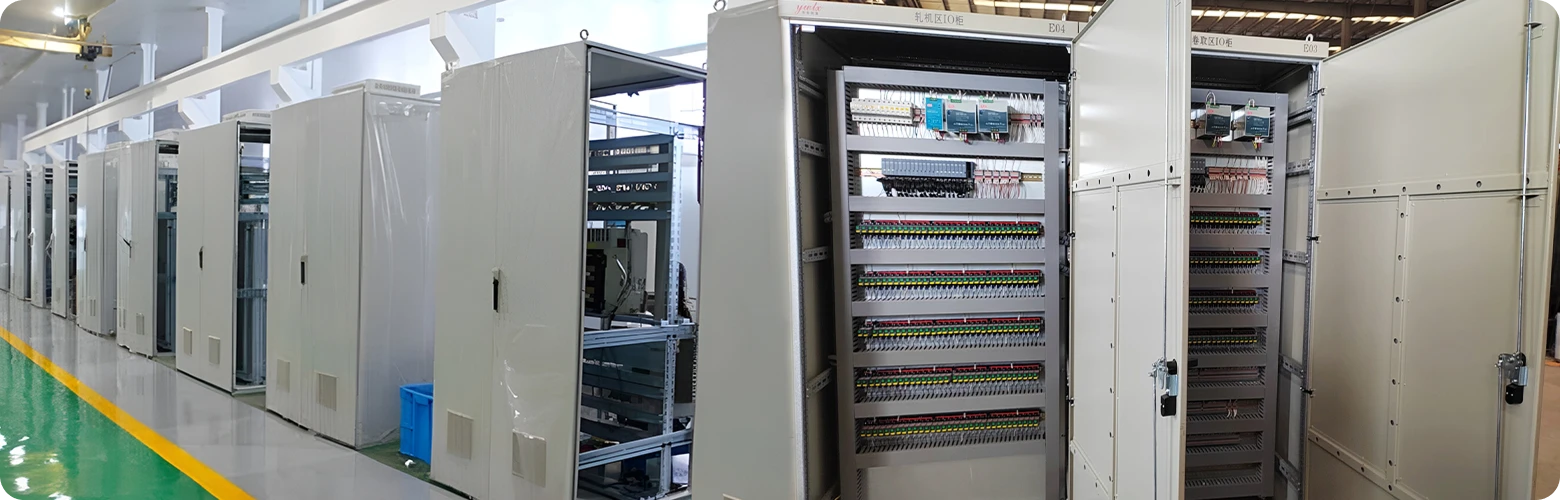

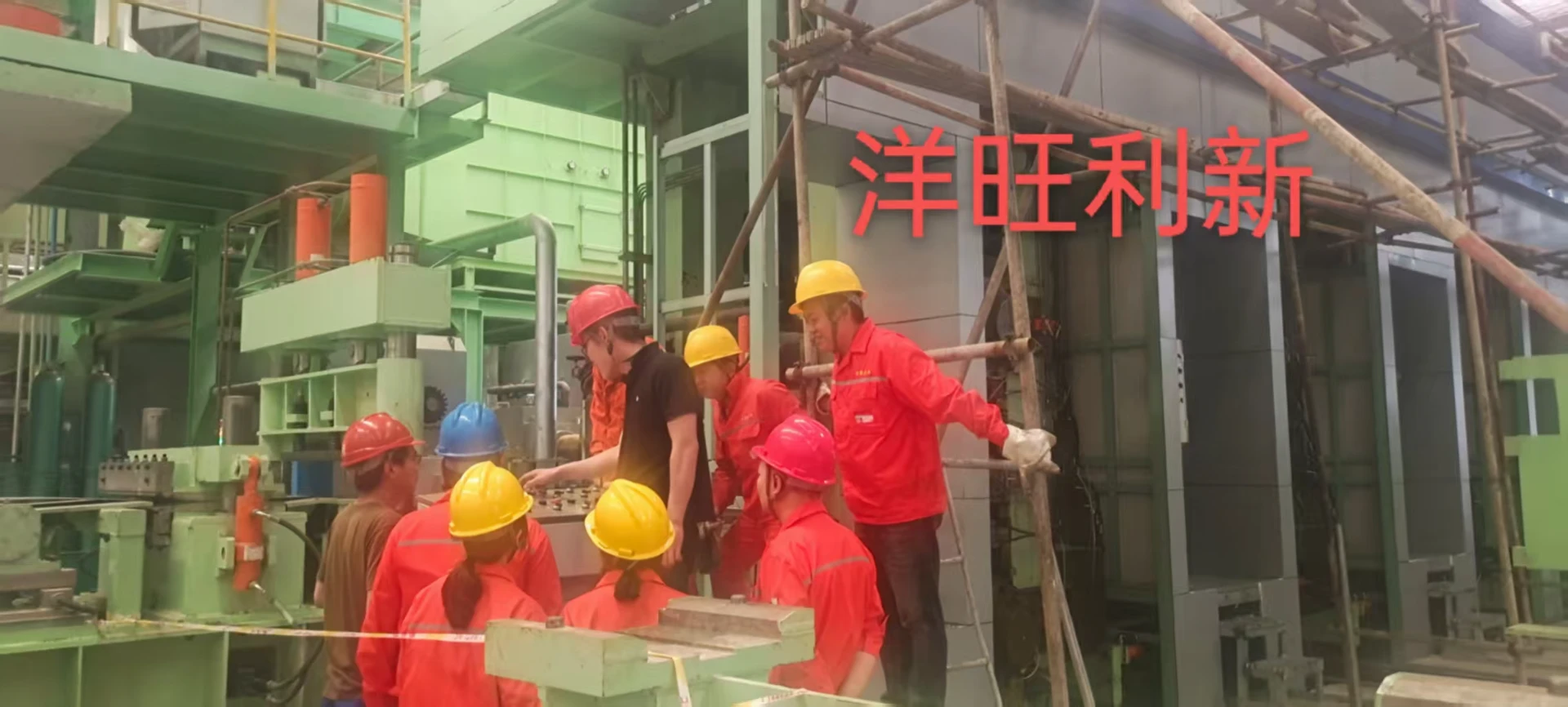
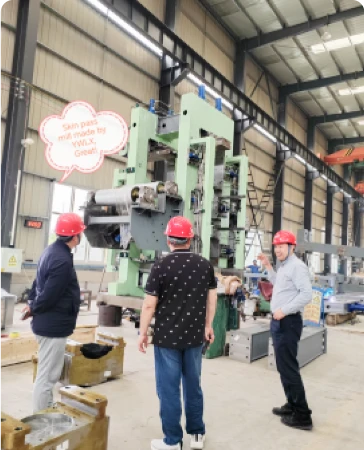
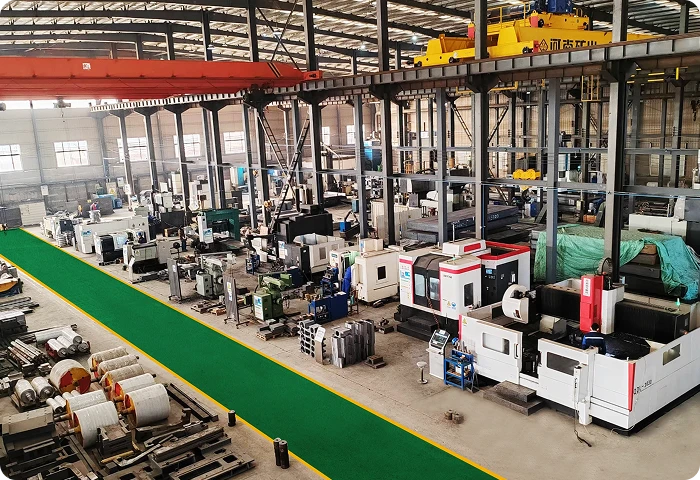
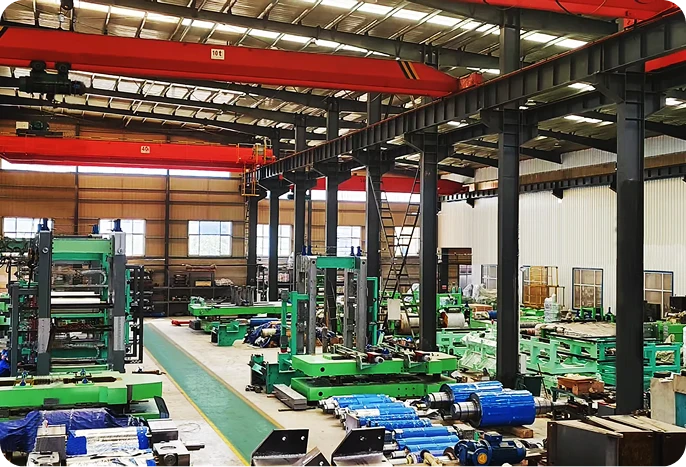
Yang Wang Li Xin operates a state-of-the-art facility over 66,000 square meters,and our manufacturing facility is fully equipped with high-tech machinery and high-capacity cranes. This enables us to handle large work pieces measuring 4.5m in width, 10m in length, and 1.5m in height, guaranteeing our capacity to produce 1800mm skin-pass mills and 1450mm rolling mills. The individual piece can weigh up to 100 tons.


Quality is fundamental to the enterprise survival. We have established a comprehensive and meticulous quality management system and have successfully obtained ISO14000 certification. Starting from the design source, it supervises the entire production cycle, including design, procurement, processing, assembly, in-factory testing, installation, and online commissioning. The workshop is equipped with measuring tools like vernier calipers, spectrometers, hardness testers, and ultrasonic flaw detectors. They are used to check materials and control tolerances to ensure the final equipment meets or exceeds requirements. All products have a unique code, This enables the easy identification and traceability of the equipment components and ensures full control of quality.


-
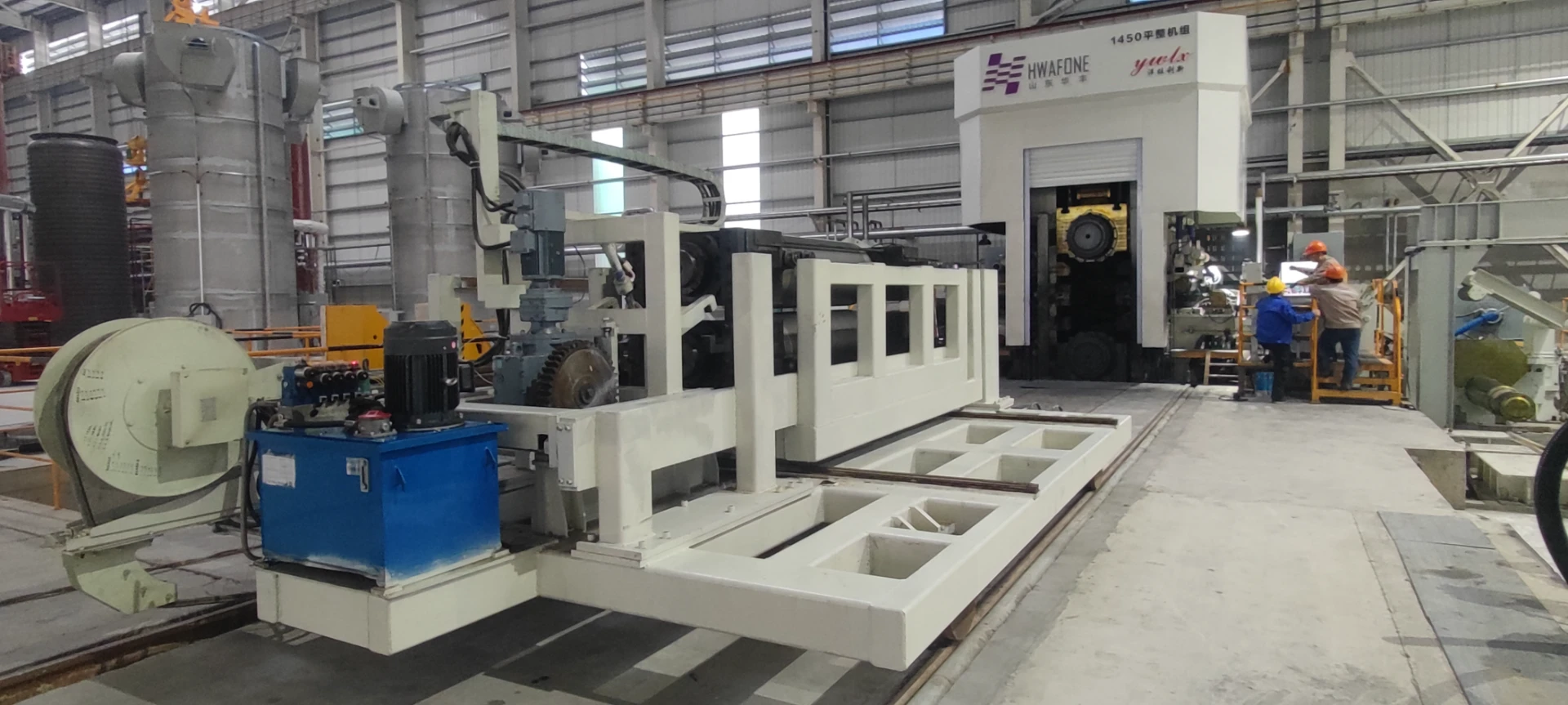 Tandem Cold Mill: Precision Rolling & High EfficiencyIndustry Trends and the Evolution of Cold Rolling Precision The global metallurgical industry is currently experiencing a profound transformation, driven by an escalating demand for high-performance materials characterized by superior surface quality, precise dimensional accuracy, and enhanced mechanical properties. At the vanguard of this industrial evolution stands the tandem cold mill , a pivot
 -
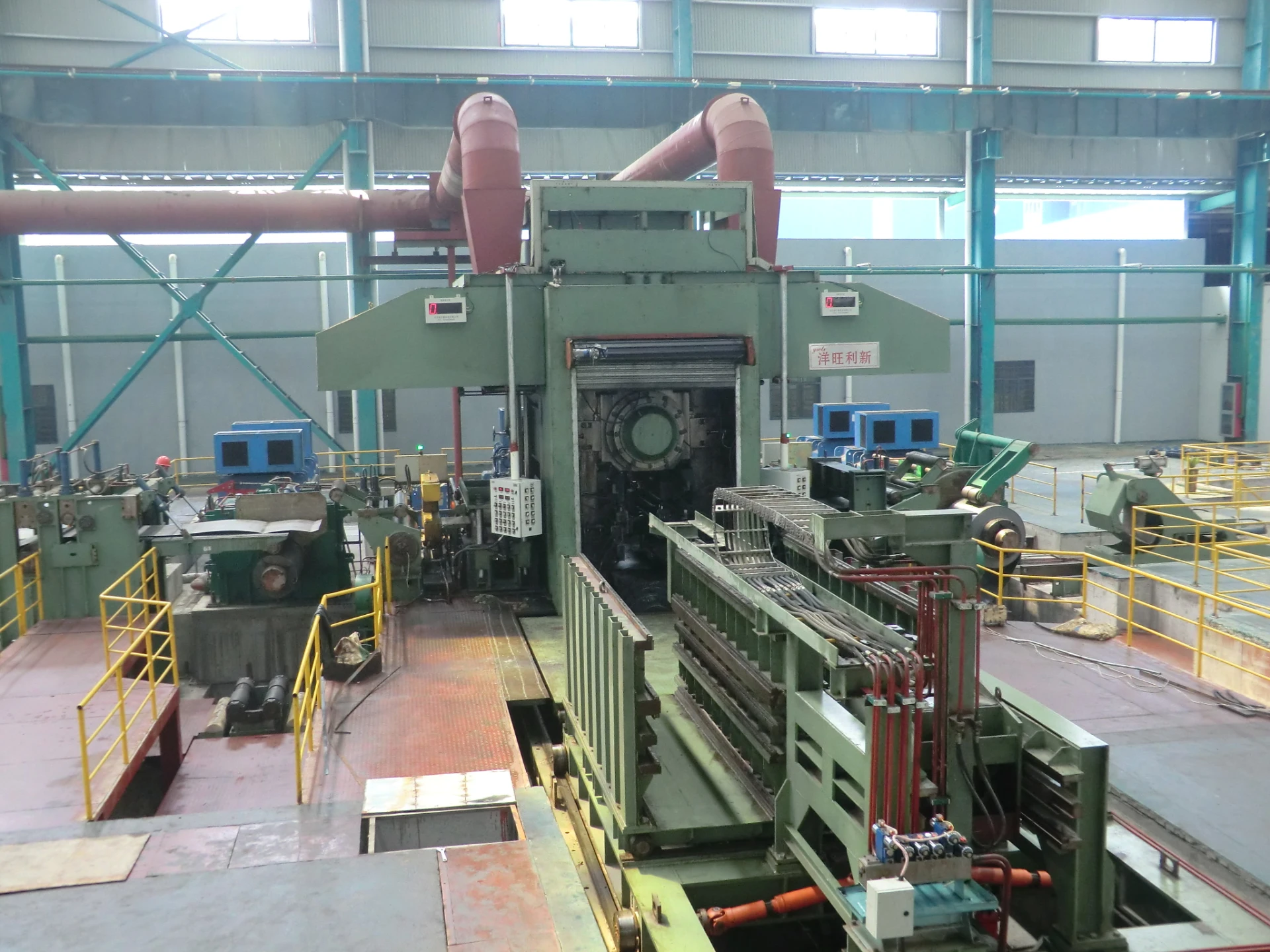 brass rolling millBrass rolling mills hold a pivotal role in the manufacturing landscape, serving as the backbone for producing high-quality brass components used across diverse industries. Understanding the intricacies of brass rolling mills requires not only technical know-how but also a first-hand insight into the processes that ensure product excellence. The essence of a brass rolling mill begins with its capab
 -
 Steel Strip Mill Manufacturing Innovative Solutions for High-Quality ProductionThe Steel Strip Mill Driving Innovation in Metal Processing In today's rapidly evolving industrial landscape, the steel strip mill stands as a crucial player in the production of high-quality steel strips essential for various applications. This specialized facility is not just a factory; it is a hub of innovation and technology that transforms raw steel into versatile materials used across multip


